
What AMF Levels Can Tell You About Your Soil Health

Red Cedar Ag • April 7, 2026

What AMF Levels Can Tell You About Your Soil Health

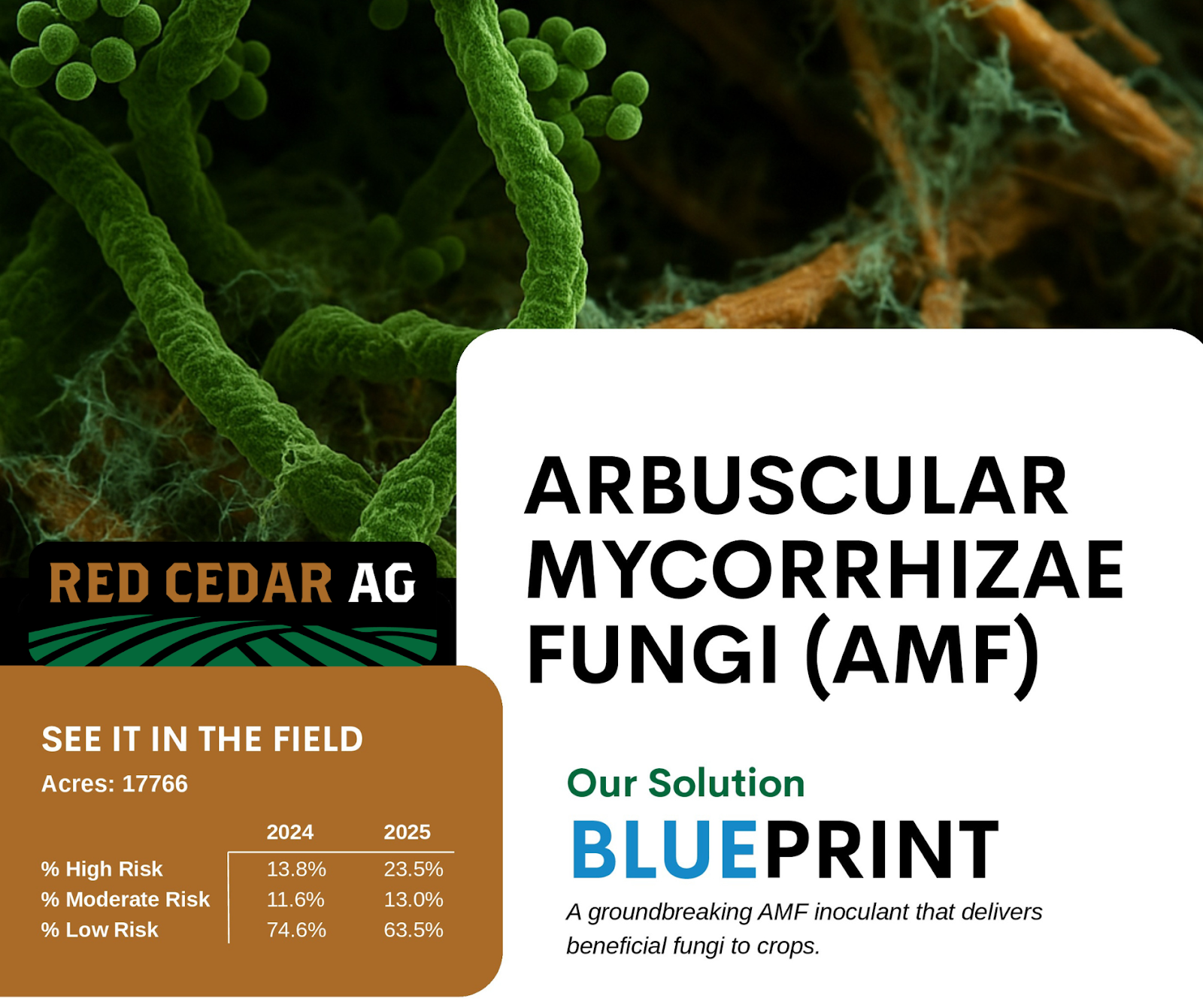
When we talk about soil health, most conversations focus on nutrients like N, P, and K. But soil biology also plays a major role in how efficiently your crop can access those nutrients. One important biological measurement included in EarthOptics testing is arbuscular mycorrhizal fungi (AMF).

Why AMF Matters


EarthOptics measures key AMF groups like Rhizophagus, Glomus, Diversispora, and Gigaspora. These beneficial fungi form a relationship with plant roots that helps expand the effective root system, allowing crops to better access nutrients like phosphorus, zinc, copper, sulfur, nitrogen, and water.


In simple terms, strong AMF activity can help improve nutrient efficiency, support root development, and build better soil structure.


Low AMF Levels Could Mean:


  • Reduced nutrient efficiency
  • Poor root colonization
  • Limited access to immobile nutrients like phosphorus
  • Higher stress risk during tough growing conditions 


These lower levels are often linked to factors growers are already familiar with, such as aggressive tillage, soil disturbance, saturated conditions, heavy fungicide use, or excessive phosphorus applications.

Why This Matters for Your Operation


If you’ve already invested in fertility, it makes sense to make sure your soil biology is helping you get the most out of it. Let’s look at your EarthOptics report together and talk through what it means for your farm.


Contact Red Cedar Ag today to review your soil data and build a plan for 2026.

Soil Status 2026
By Red Cedar Ag April 10, 2026
Track soil temperatures across Northwest Wisconsin with Red Cedar Ag’s Soil Status 2026 report. Weekly updates posted every Friday.
By Red Cedar Ag April 8, 2026
2026 Pioneer Agronomy Resources
By Red Cedar Ag April 1, 2026
Don’t wait until something fails in-season. Save 25% on select transfer and chemical pumps through April 30 to stay ahead this season.