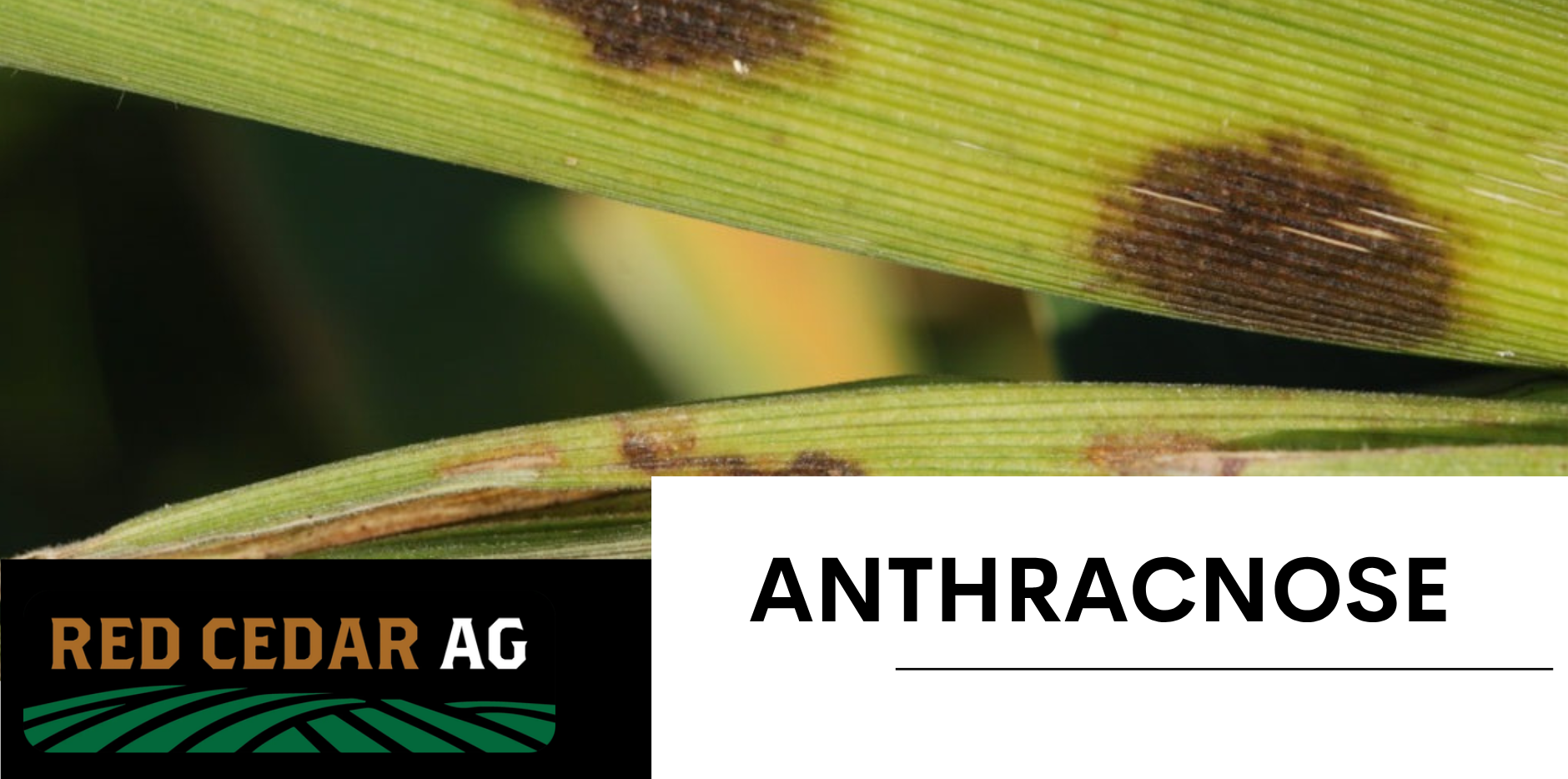
Anthracnose is one of the major stalk rots of corn, responsible for significant yield and economic losses across the Midwest. While infection can reduce yield by limiting nutrient movement during grain fill, the greater risk is lodging due to weakened stalk integrity.
How Anthracnose Develops
The pathogen (Colletotrichum graminicola) survives in crop residue and can persist in soil. Spores are dispersed by rain splash and wind, moving from infected residue at the soil surface upward onto lower leaves and stalk tissue.
From there, the fungus can colonize stalks systemically—especially when plants are under stress. This makes anthracnose not just a surface-level issue, but one that can impact the entire plant structure.
When and Where It Shows Up
Infection commonly occurs through wounds caused by insect feeding, hail, or mechanical injury. Once inside the plant, disease development is favored by warm (75–85°F), humid conditions—especially during and after silking.
Extended periods of cloudy, wet weather increase the likelihood of infection and stalk colonization, making in-season conditions a key driver of severity.
What We’re Seeing in the Field
Across 17,766 acres, data shows an increase in anthracnose risk year over year:
- High Risk: 31.2% (2024) → 42.0% (2025)
- Moderate Risk: 10.7% (2024) → 9.1% (2025)
- Low Risk: 58.1% (2024) → 48.9% (2025)
With more acres shifting into high-risk categories, anthracnose is becoming a larger concern for maintaining standability and protecting yield potential. 
Our Solution
Managing anthracnose starts with understanding when conditions are favorable and taking steps to reduce plant stress and protect stalk integrity.
Xyway LFR + Forcivo™ fungicide provides a proactive approach—helping protect plants during key periods of disease development and supporting overall plant health through the season.
If you’re seeing signs of stalk rot or want to better understand your risk, give us a call at
(715) 658-2767 or reach out to
info@redcedarag.com.