
Stalk Rot Risks in Our Area: What We’re Seeing
Stalk Rot Risks in Our Area:
What We’re Seeing
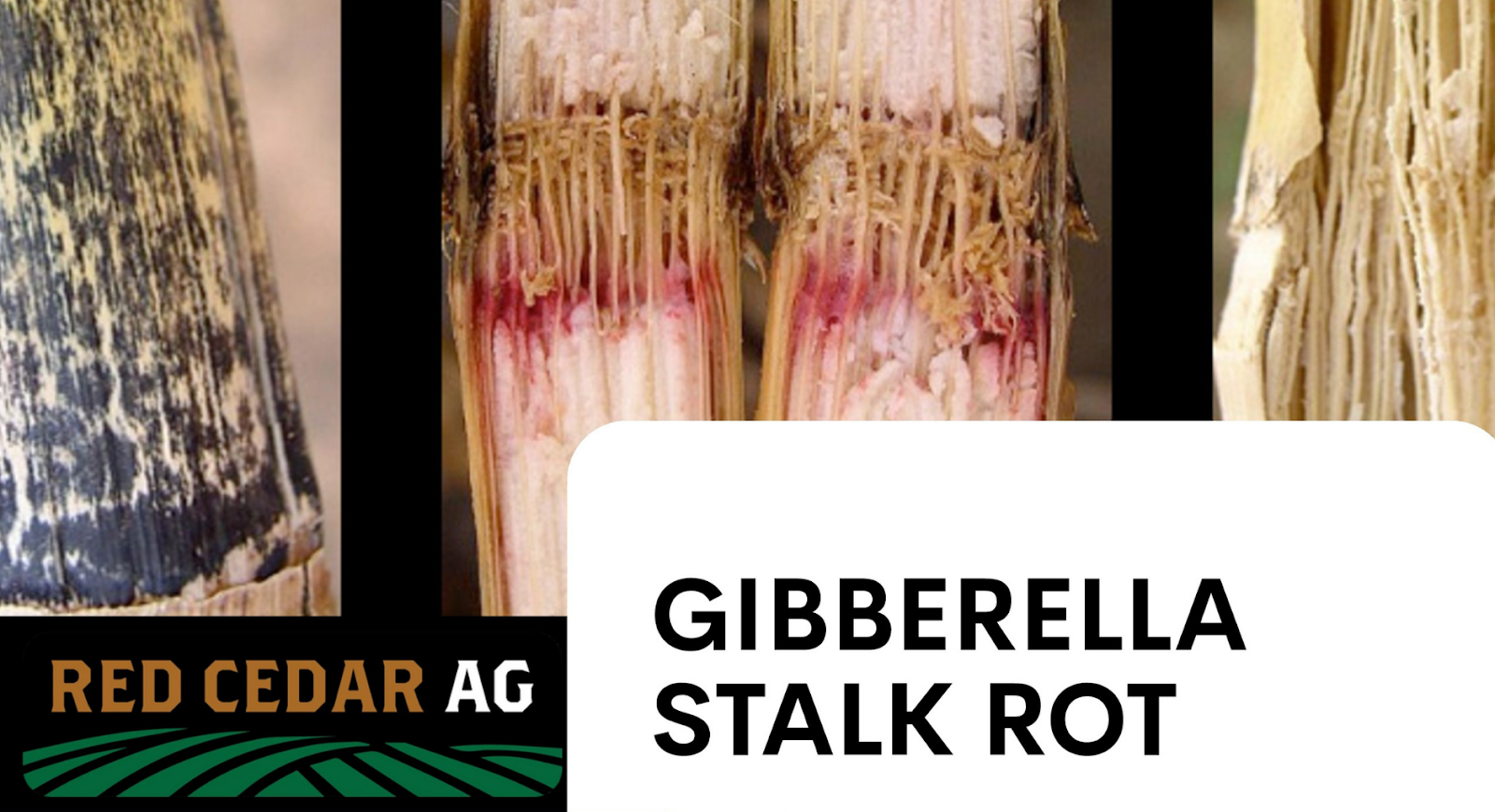
Every season, growers deal with hidden yield threats that don’t always show up until harvest. One of those threats is Gibberella stalk rot — a disease that can quietly reduce standability and increase harvest losses if not managed early.
Using
EarthOptics data and field observations, Red Cedar Ag continues to monitor disease pressure across our area to help growers better understand their risk.

Why Gibberella Stalk Rot Matters
Gibberella is one of the major stalk rots of corn and is responsible for hundreds of millions of dollars in losses each year across the Midwest.
Yield loss can occur because the plant struggles to move nutrients during grain fill, but the biggest concern is often lodging caused by weakened stalk strength. When stalks fail, harvest efficiency drops and losses can increase quickly.
What We’re Seeing
Based on observations across
17,766 acres, we are continuing to see Gibberella present at varying risk levels.
2024:
- 33.9% High Risk
- 28.3% Moderate Risk
- 37.8% Low Risk
2025:
- 31.4% High Risk
- 24.9% Moderate Risk
- 43.8% Low Risk
While risk levels vary year to year, Gibberella continues to be something growers should consider when planning for harvest and future management decisions.
Our Solution: Variety Selection
One of the best ways to manage Gibberella risk is through strong hybrid selection. Choosing the right genetics can help improve stalk strength and reduce lodging risk.
Some varieties to consider include:
- P91083PCE
- P92399PCE
- P9466PCE
Learn More
If you have questions about Gibberella stalk rot, EarthOptics data, or hybrid selection, the Red Cedar Ag team is here to help.
Call or message us today to learn more!