As corn moves deeper into the growing season, it’s easy to assume the crop has already taken up most of the nitrogen it needs. In reality, significant nutrient demand remains well after tasseling, making late-season nitrogen management an important consideration for protecting yield potential.
That’s where
melted urea can be a valuable tool.
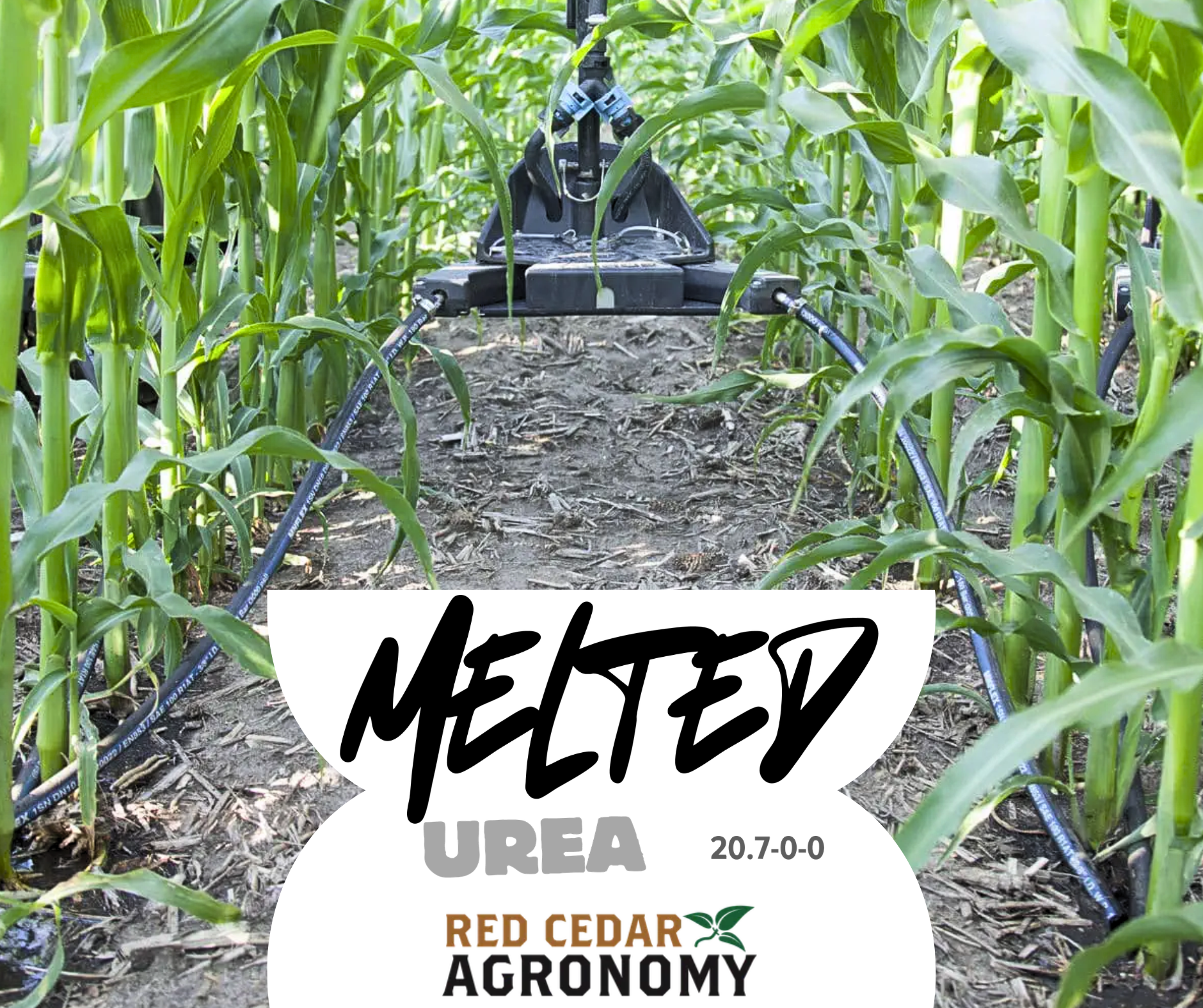
At Red Cedar Agronomy, we offer melted urea as a flexible nitrogen source that can be integrated into in-season fertility programs to help support crop performance during critical reproductive stages.
Corn Still Needs Nitrogen After Tassel
Many nitrogen programs focus heavily on pre-plant and early-season applications, but corn continues to take up nutrients well into grain fill.
Research has shown that approximately
30-40% of total nitrogen uptake can occur after pollination, with significant demand continuing through the R2-R4 growth stages (blister through dough).
During this period, adequate nitrogen availability supports:
- Kernel development
- Grain fill
- Stalk integrity
- Plant health and stress tolerance
- Overall yield potential
When nitrogen availability becomes limited during reproductive growth, the crop may pull nutrients from leaves and stalk tissue, potentially impacting standability and final yield.
What Is Melted Urea?
Melted urea is a concentrated liquid nitrogen source created by dissolving dry urea into solution. Unlike traditional dry applications, melted urea offers flexibility in how and when nitrogen can be delivered throughout the season.
It works well in:
- Fertigation systems
- Foliar fertility programs
- Supplemental in-season nitrogen applications
- Custom nutrient blends
Because it is fully dissolved, melted urea can be easily incorporated into existing fertility programs and application systems.
Why the Nitrogen Form Matters
Another advantage of melted urea is the form of nitrogen it provides.
After application, urea is quickly converted into ammonium (NH₄⁺), a of the form of nitrogen corn uses to build proteins, enzymes, chlorophyll, and other compounds essential for growth.
Nitrate nitrogen (NO₃⁻), another common nitrogen form, can also feed the crop effectively. However, before nitrate nitrogen can be incorporated into plant tissue, it must first be converted into ammonium nitrogen—a process that requires energy.
As corn enters reproductive growth, the plant is directing more of its energy toward kernel development and grain fill. Providing nitrogen that readily becomes ammonium nitrogen may improve nitrogen-use efficiency by reducing the amount of energy the plant must expend converting nitrate nitrogen before it can be used.
Both nitrate and ammonium are effective nitrogen sources, but maintaining access to ammoniacal nitrogen during late-season growth may help the plant allocate more of its resources toward producing yield rather than converting nitrogen into a usable form.
Combined with a well-timed split application strategy, melted urea offers another tool for improving nitrogen efficiency while supporting the crop during one of its highest-demand periods.
Why Growers Are Taking a Closer Look at Split Nitrogen Applications
Weather conditions, soil type, and nitrogen loss can all impact nutrient availability throughout the season. Applying all nitrogen up front may not always align with when the crop ultimately needs it.
Split application strategies allow growers to:
- Better match nitrogen availability with crop demand
- Improve nitrogen-use efficiency
- Reduce the risk of early-season nitrogen loss
- Make adjustments based on growing conditions
- Supply nitrogen later in the season when the crop is actively building grain
Late-season applications aren’t about replacing a sound fertility program—they’re about providing another opportunity to support the crop during one of its most important growth periods.
A Flexible Tool for Late-Season Management
Whether you’re applying through irrigation, supplementing an existing fertility program, or looking to keep nitrogen available during grain fill, melted urea provides another option for delivering readily available nitrogen when the crop is actively using it.
As corn enters grain fill and yield potential is being determined, ensuring adequate nitrogen availability can help support a strong finish.
Get Started
If you’re evaluating late-season nitrogen strategies or would like to discuss whether melted urea fits your operation, contact your RCA agronomist. We’re happy to help build a program that matches your crop, management goals, and growing conditions.